
How to write an IEP progress report with no progress
How to write an IEP progress report with no progress: what to say, what the regulation expects, wording without blame, and the call to make first.
AI strategies and tools that support special education teachers with IEP documentation, progress monitoring, and classroom support.
How to write an IEP progress report with no progress: what to say, what the regulation expects, wording without blame, and the call to make first.
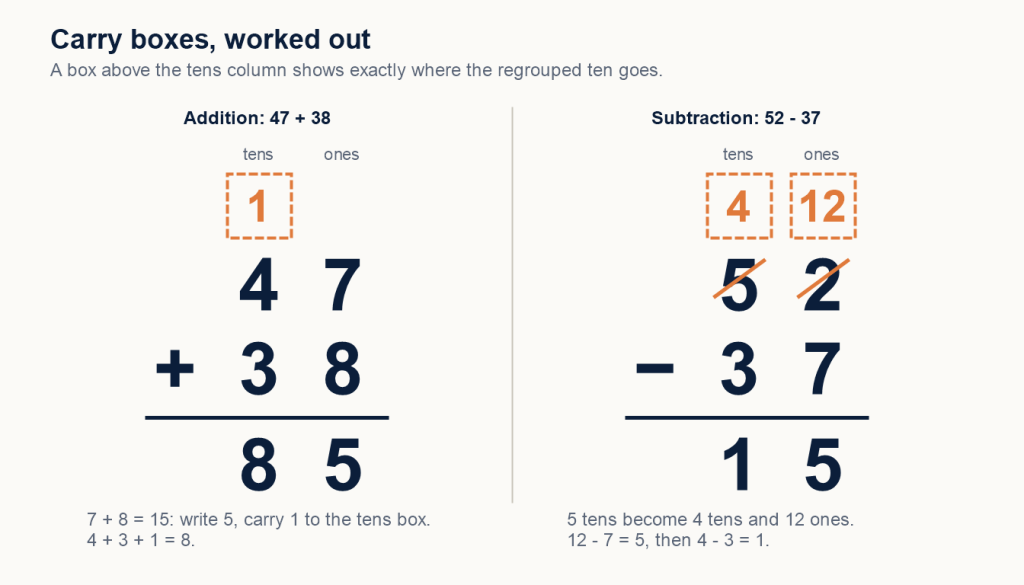
Regrouping worksheets with carry boxes give the carried ten a place on the page: why that helps in special education math, and when to fade the box.

Measurable IEP goals for reading fluency: the four parts every goal needs, examples for rate, accuracy and phrasing, and how to set a fair number.

Frequency data collection in special education counts how often; duration times how long. How to set up each, turn counts into rates, and pick one.

IEP progress report comments families can read: a four-part pattern for any special education goal, five examples, and the words to leave out.

A prompt hierarchy data sheet for special education: the prompt levels, which level to mark, most-to-least vs. least-to-most, and a sheet to print.

Sub plans for a special education classroom: the five pages a substitute needs, how much student information to share, and lessons a stranger can teach.

How to graph IEP progress monitoring data in special education: baseline, aim line, trend line, and when a flat line means the teaching should change.

Lesson planning takes too long when one lesson is really four: the plan, the practice page, the other way in, and the sub note. Cut the rebuilding first.
IEP data collection that happens during the lesson: a printable three-box data sheet for any goal, one sheet for a whole group, and when to mark it.